
1. Introduction
MOTS-C peptide has gained attention in scientific research because of its connection to mitochondrial biology, cellular energy regulation, and metabolic signaling. Researchers are studying this naturally occurring peptide to understand how cells respond to changing energy demands and maintain biological balance.
MOTS-C is a mitochondrial derived peptide consisting of 16 amino acids. Unlike many peptides produced through conventional cellular pathways, MOTS-C originates from genetic information associated with mitochondria, the structures responsible for producing much of the energy required by cells.
Scientific interest in MOTS-C research peptides continues to grow as laboratories investigate their molecular characteristics and potential involvement in metabolic processes.
Although early findings provide interesting insights, most MOTS-C studies involve laboratory experiments and animal models. Additional human research is necessary to establish its biological significance, safety, and possible clinical relevance.
Understanding the available evidence helps researchers approach this compound with realistic expectations and appropriate scientific caution.
2. What Is the MOTS-C Peptide and Why Are Researchers Studying It?
MOTS-C is a small peptide encoded within mitochondrial DNA. Scientists first identified it while investigating how mitochondria communicate with other parts of the cell and influence metabolic activity.
Mitochondria are commonly associated with energy production, but their functions extend beyond generating cellular fuel. They also participate in signaling pathways, stress responses, and the regulation of important biological processes.
Researchers have investigated MOTS-C because experimental findings suggest that it may participate in communication between mitochondrial activity and broader cellular functions.
Some laboratory studies have examined how MOTS-C responds to metabolic stress and whether its activity changes under different experimental conditions.
Scientists are particularly interested in understanding how mitochondrial peptides contribute to cellular adaptation. These investigations may reveal additional information about the relationship between energy availability, metabolic regulation, and cellular signaling.
For laboratories exploring MOTS-C peptides for research, these biological characteristics make the compound an interesting subject for controlled scientific investigation.
However, findings from experimental models should not be interpreted as proof of benefits in humans.
3. MOTS-C Peptide Research in Metabolism and Cellular Energy
Metabolic regulation is one of the primary areas of interest in MOTS-C peptide research. Scientists are examining how this compound interacts with pathways involved in cellular energy management.
One pathway frequently discussed in preclinical studies involves AMP activated protein kinase, commonly known as AMPK. This enzyme plays an important role in helping cells respond to changes in energy availability.
Experimental research suggests that MOTS-C may influence AMPK associated signaling under certain conditions. Researchers continue to investigate these interactions and their significance within different biological systems.
Another area of interest involves glucose metabolism. Animal studies have explored how MOTS-C affects metabolic responses, including processes associated with glucose utilization and insulin sensitivity.
These findings are scientifically interesting, but they do not establish that MOTS-C improves metabolic health or treats metabolic disorders in humans.
Researchers also examine mitochondrial stress responses to understand how cells adapt when energy requirements change.
Because cellular metabolism involves many interconnected pathways, identifying the precise role of MOTS-C requires additional investigation.
Carefully controlled experiments, reproducible findings, and appropriate laboratory methods remain essential for understanding this peptide’s biological activity.
4. Choosing Quality MOTS-C Peptides for Laboratory Research
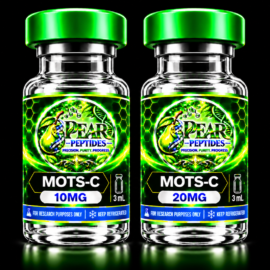
Reliable experimental results depend on consistent laboratory materials and accurate product information. Researchers evaluating a MOTS-C research peptide supplier should consider product identity, analytical documentation, and appropriate storage conditions.
Peptide composition and purity can influence experimental outcomes. Differences between research materials may affect consistency, particularly when laboratories compare results across multiple studies.
Independently tested MOTS-C peptides can provide useful information about product characteristics. Researchers should review available testing records and confirm that documentation corresponds to the specific product.
When comparing wholesale MOTS-C peptides, laboratories should consider product quality, supplier transparency, and dependable customer service alongside pricing.
At Pear Peptides, we believe quality research materials should be accessible without unnecessary complications.
As a family owned business, we offer independently tested research peptides at affordable wholesale prices. Our products ship directly from our Texas warehouse, and we work to make every ordering experience simple and convenient.
We value the trust our customers place in us and believe friendly communication and honest service are essential parts of a positive customer experience.
All MOTS-C research products are intended strictly for laboratory research and are not for human or veterinary use.
5. Conclusion
MOTS-C peptide continues to attract scientific interest because of its relationship with mitochondrial biology, metabolic signaling, and cellular energy regulation.
Preclinical investigations have identified several biological pathways worth exploring, including cellular stress responses and metabolic adaptation. However, further research is needed to determine how these findings relate to human biology.
Researchers should approach MOTS-C studies with careful experimental planning, dependable materials, and an understanding of current scientific limitations.
Pear Peptides proudly supports laboratory research by offering independently tested research peptides, competitive wholesale prices, and friendly customer service.
Our family owned business remains committed to quality, trust, and building lasting customer relationships.
Research Use Notice: MOTS-C products are intended strictly for laboratory research purposes. They are not approved for human or veterinary use.